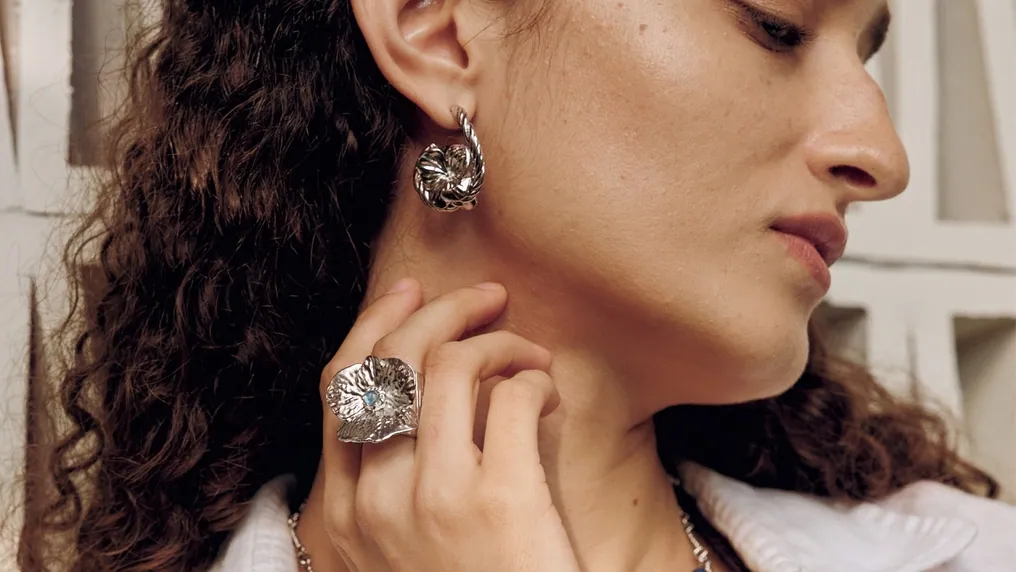
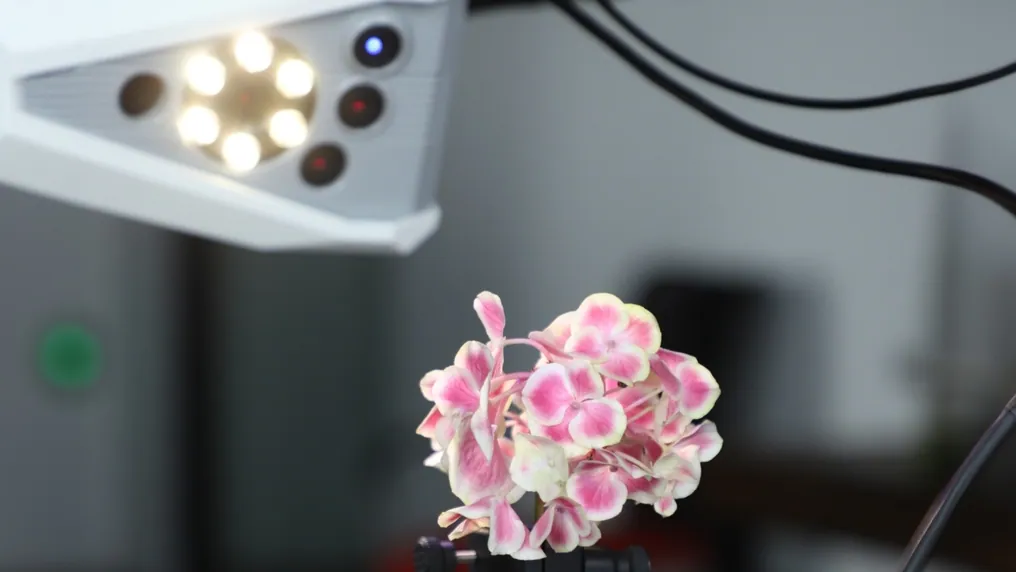
Scan a ring. Keep every facet.
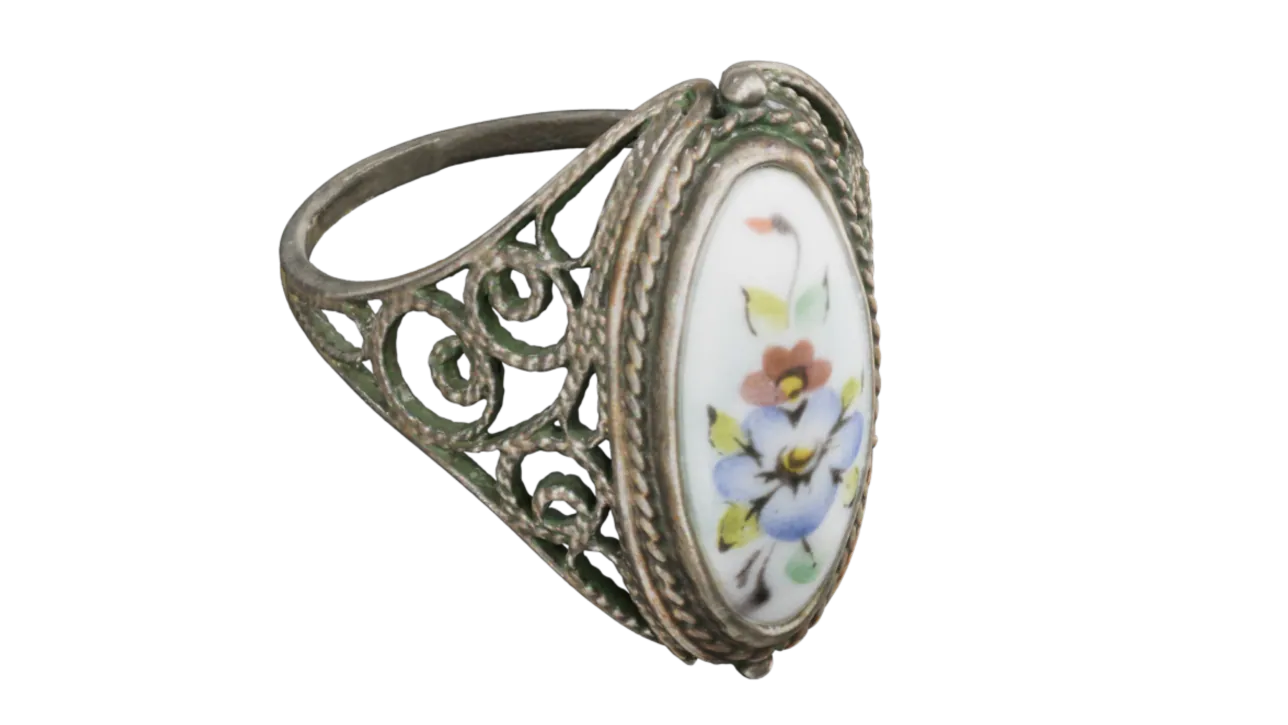
Artec 3D scanners capture jewelry — polished gold, set stones, sub-millimetre filigree — as measurable, full-colour 3D models you can model, cast, repair and catalogue from.
Up to 5-micron accuracy on the desktop. 0.05 mm in your hand. The same open file formats into MatrixGold, 3Design, Rhino or ZBrush.
Artec puts jewelry training at under two hours — most benches are scanning production pieces the same week.

5-micron accuracyArtec Micro II resolves to 0.005 mm with 2-micron repeatability, certified to ISO 12836.
Colour, not just shape24-bit texture — 5 MP on Spider II — so stones, patina and hallmarks survive the scan.
Nothing touches the pieceOptical, target-free capture. No moulding, no clamps, no marks on a client's heirloom.
Data your CAD can useWatertight meshes as STL, OBJ, PLY, STEP or IGES — not a picture of a piece, a copy of it.
What are you trying to digitize?
Four jobs, four different answers. Pick the one that sounds like your bench.
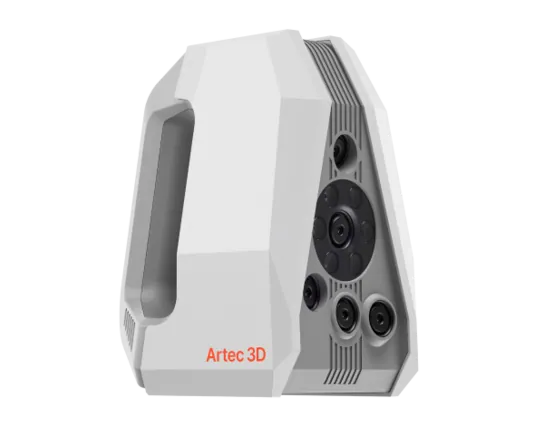
Best for rings and settingsArtec Micro IIDesktop, 0.005 mm, runs the passes itself
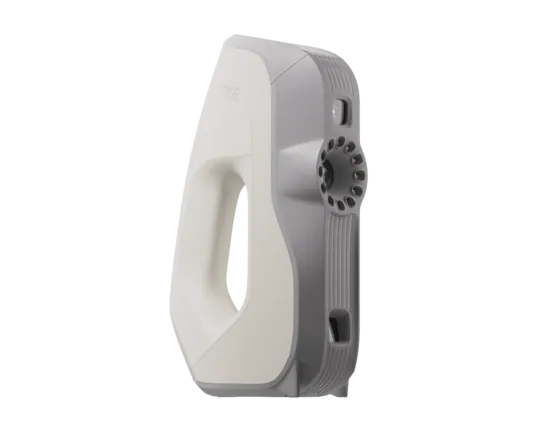
Artec Spider IIHandheld, 0.05 mm, full colour
Best for organic detailArtec Spider II0.05 mm resolution with hybrid tracking
Artec Micro IIFor anything small enough for the platter
Best for made-to-order workArtec Micro IIDesktop scanning of settings and keepsakes
Artec EvaFor pieces past 10 cm and display work
Best for a single precious objectArtec Spider IIUltra-high resolution on small artefacts
Artec EvaFast full-colour capture of medium pieces
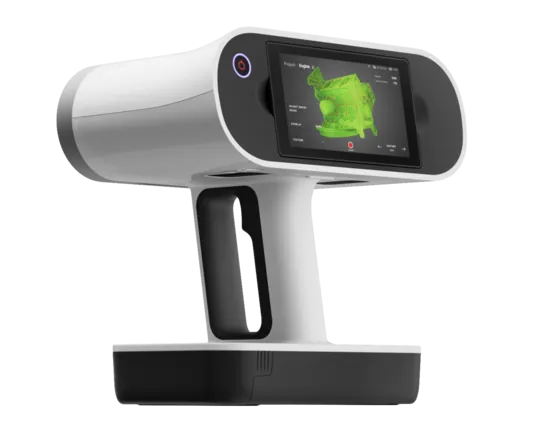
Artec LeoWireless, with the processing onboardWhy the bench still loses days
Modelling from scratch eats the day
“CAD modelling a handmade ring with a lot of detailing would take 3–4 hours. Even then it wouldn't be exactly the same.” — Olivia Champion, New Product Development Engineer at Cooksongold.
Hand reproduction flattens the detail
A serrated edge, a thickness change of under a millimetre, a worn engraving. The features that make a piece recognisable are the first ones an approximation loses.
Polished metal and set stones
Bright gold and light-scattering gems are the reason most jewelers have been told their work simply cannot be 3D scanned.
You cannot risk the original
A customer's heirloom or a museum's ring cannot be moulded, clamped or coated so that a copy can be made of it.
What the scanners do about it
Structured light, four 13 MP cameras on the desktop unit, and processing built for small reflective objects.

Settings, galleries and pavé: At 40-micron 3D resolution a claw setting reads as claws and pavé reads as separate stones, not as a lump of metal.
From a 3 mm stone to a 2 m display: Micro II for XS–S on the platter, Spider II for S–M in the hand, Eva and Leo for the pieces that stopped being jewelry-sized.
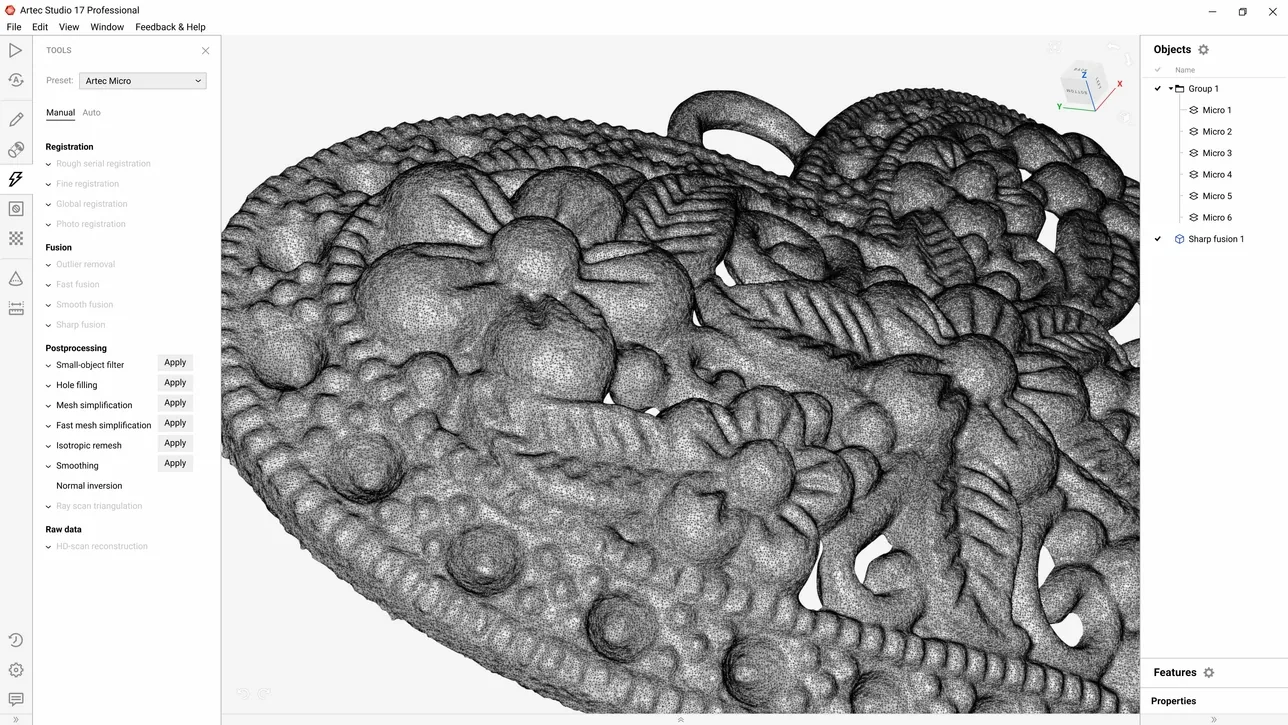
Into the pipeline you already have: Artec Studio fuses the passes into a watertight mesh and exports STL, OBJ, PLY, STEP or IGES for MatrixGold, 3Design, Rhino, Geomagic Freeform or ZBrush.
One scan, many jobs: The same model drives the CAD edit, the casting file, the web catalogue and the insurance record.
Bench to casting, step by step
The chain Cooksongold and milk-design both run. Nothing after step two is Artec-only — it is a standard mesh from there on.
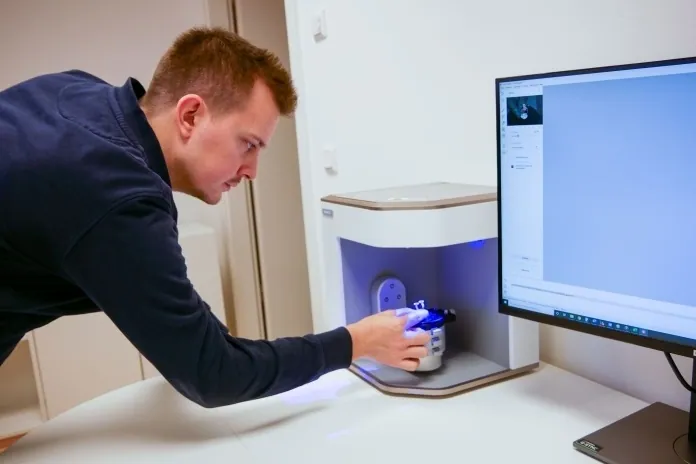
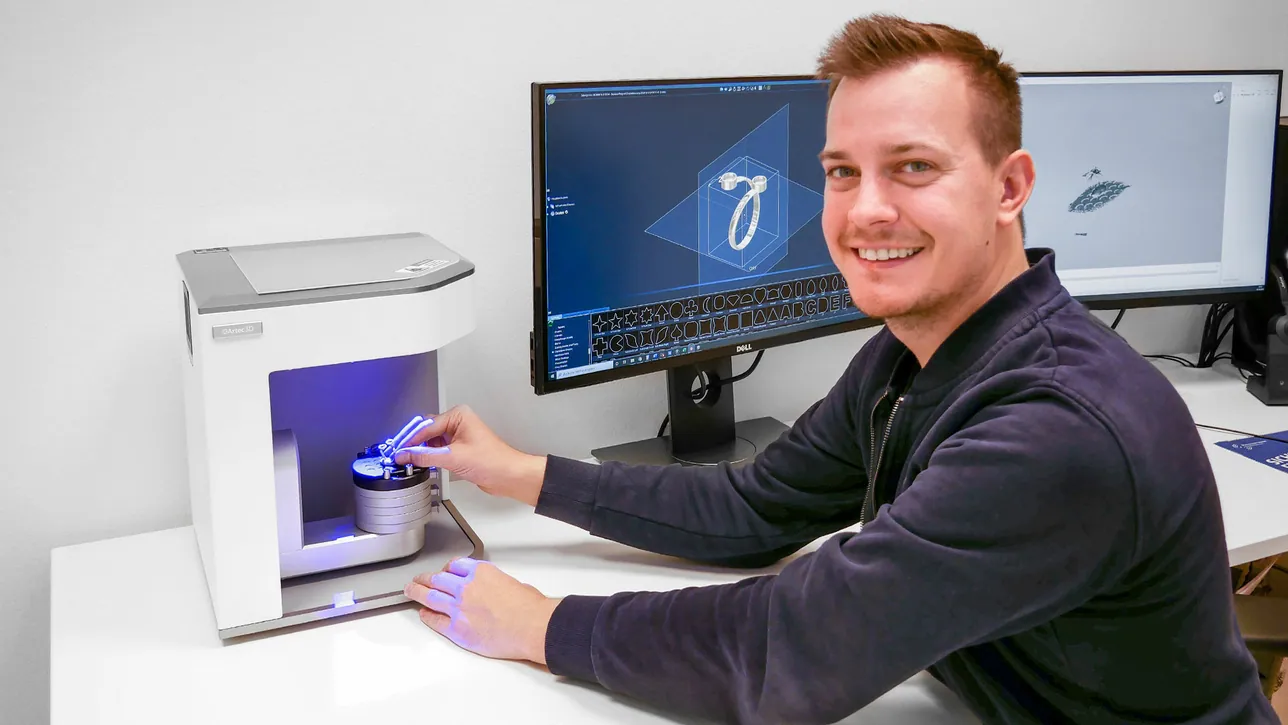
1. Mount and scanFix the piece to the platter and start. Micro II's automated mode runs the passes itself; Spider II is freehand and needs no targets stuck to anything.
2. Fuse and clean in Artec StudioAutopilot aligns and merges the passes, removes glare from the texture and outputs a watertight mesh.
3. Check it against the pieceMeasure wall thickness, ring size and stone seats on the model before anything is cut, cast or quoted.
4. Model on top of the scanExport into MatrixGold, 3Design, Rhino or ZBrush and edit — resize the shank, swap the setting, thicken a gallery.
5. Print and castPrint the pattern in castable wax or resin and cast as usual. milk-design goes from scan to cast metal in hours rather than weeks.
6. Show the customer firstSend the model for approval before metal is committed, then keep it as the reorder, repair and valuation record.
What changes on the bench
The figures below are the customers' own, published on artec3d.com.
Half the modelling time
Cooksongold digitizes a piece in one to two hours against three to four hours of CAD. MONSECRET brought a design cycle from about a month down to 25 days.
Measure it after it has shipped
The model stays behind. Size a replacement shank, quote a repair or settle a valuation question without the piece in front of you.
One file, everyone
The customer, the caster and the insurer all work from the same measurable copy instead of three different photographs.

What to demand of any jewelry scanner
Six questions worth asking at a demo, whoever is selling — including us.
A stated accuracy figure, with a standard behind it
“High resolution” is not a number. Artec Micro II states 0.005 mm 3D point accuracy and 2-micron repeatability, certified to ISO 12836. Ask for the equivalent line, in writing.
Resolution quoted separately from accuracy
They are two different claims and they are routinely blurred. Micro II resolves 40 microns; Spider II resolves 0.05 mm. Resolution is what decides whether pavé comes out as stones.
Colour captured with the geometry
Patina, inclusions, enamel and hallmarks are exactly why a catalogue entry cannot be replaced by a grey mesh.
Target-free and contactless
If the workflow needs stickers or spray applied to the piece, it is not usable on finished stock, on a customer's ring or on anything borrowed.
Open export, not a walled format
STL, OBJ, PLY, STEP and IGES mean the models outlive the scanner and the software subscription.
Learnable by the people who make the jewelry
Artec puts this training at under two hours. Patrick Hübner's verdict on the Micro was blunter: “Anyone can use it, literally anyone.”
Jewelers, brands and museums already doing this
Six documented projects. Every number below is the customer's own, from their case study on artec3d.com.


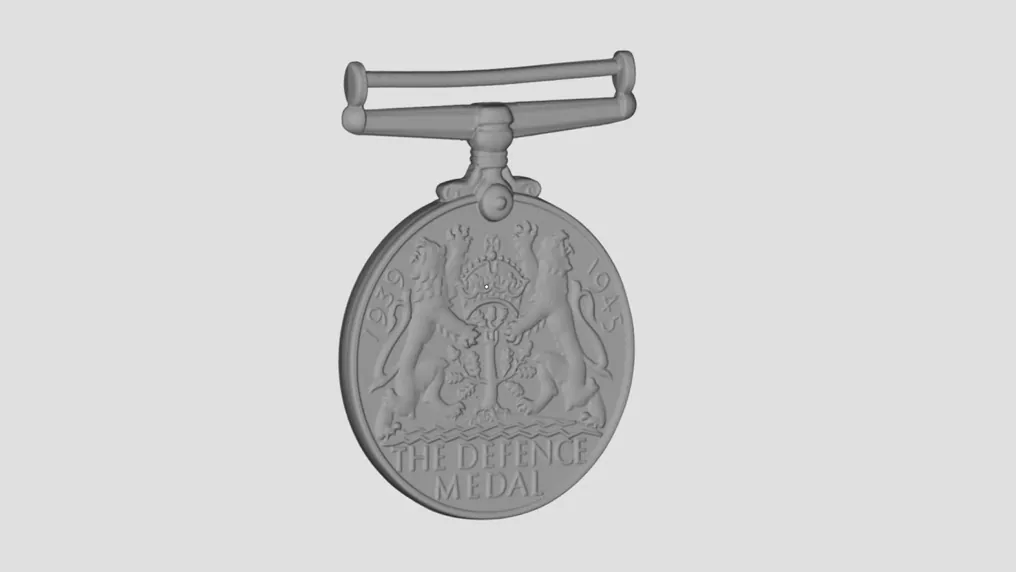
Cooksongold digitizes a century of catalogue

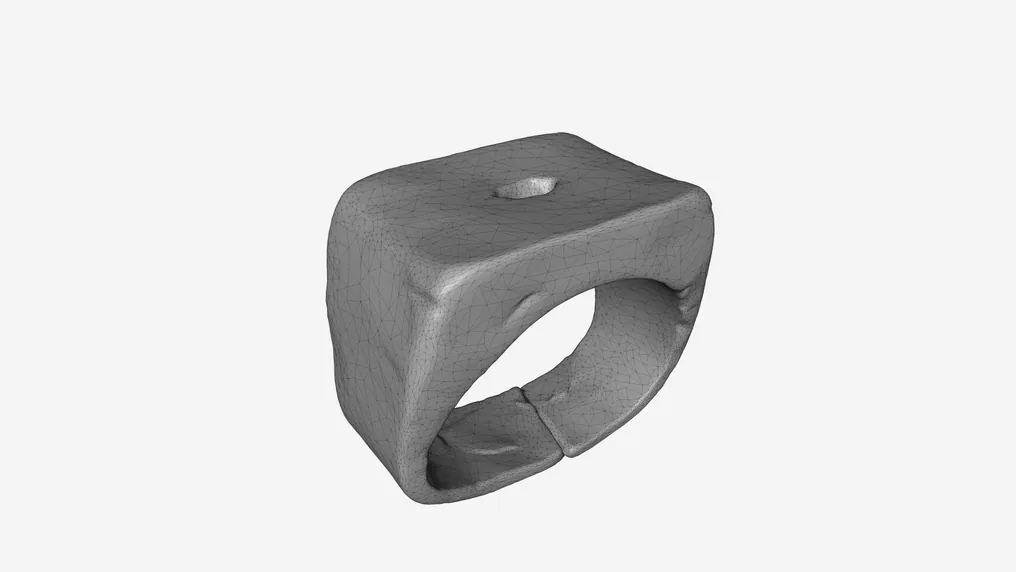
milk-design casts personalized rings in hours

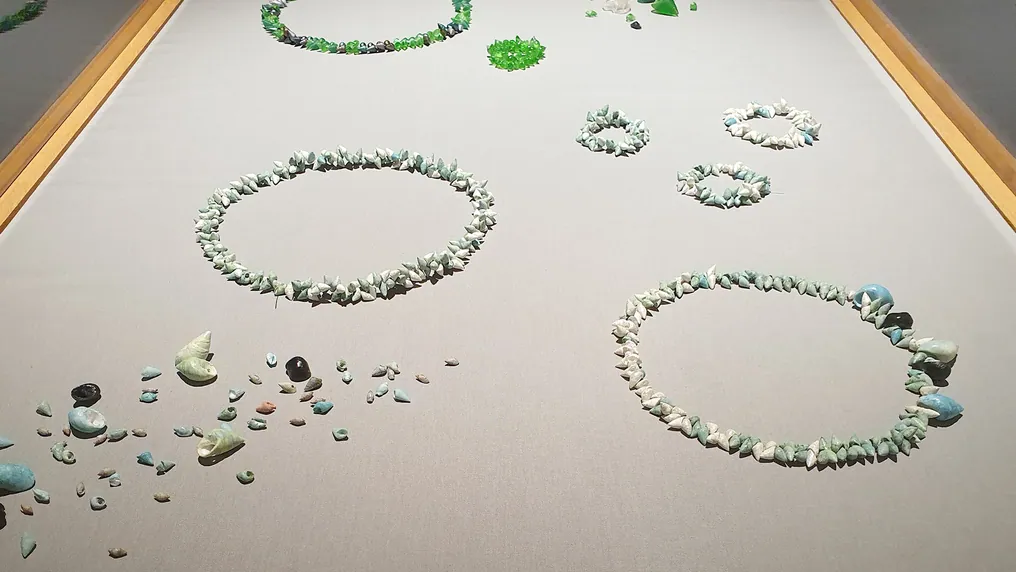
Pakana shell necklaces preserved at 10 microns
In their words
I was so impressed with how easy-to-use this scanner is. Anyone can use it, literally anyone.
Read the case studyCAD modeling a handmade ring with a lot of detailing would take 3-4 hours. Even then it wouldn't be exactly the same. Now we can digitally make amendments much faster.
Read the case studyWhen he arrived in Melbourne, he did the scan, cleaned up the file, and all in the space of an hour, sent this off to the Czech museum.
Read the case studyWith the help of the Artec Micro, we've brought to life a bridge between the ancient traditions of the Pakana people and the latest 3D technology of today.
Read the case studyWhich scanner for which work
All four run in Artec Studio and export the same open formats. What separates them is the size of the thing you put in front of them — and whether it comes to the bench or you go to it.

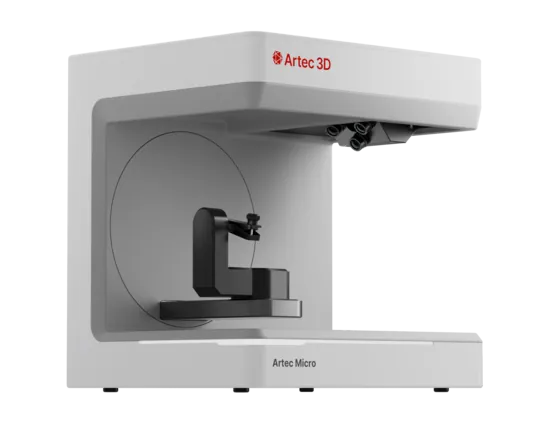
Artec Micro II
- Type
- Desktop, fully automated
- 3D point accuracy
- 0.005 mm
- 3D resolution
- 0.04 mm
- Colour texture
- 24 bpp, 4 × 13 MP cameras
- Object size
- Up to 200 × 200 × 150 mm, max 2 kg
- Weight
- 12 kg
- Best for
- Rings, settings, gems, hallmarks, engraving

Artec Spider II
- Type
- Handheld, blue structured light
- 3D point accuracy
- 0.05 mm
- 3D resolution
- 0.05 mm
- Colour texture
- 5 MP, 24 bpp
- Object size
- S–M, from coin-sized upward
- Weight
- 0.95 kg
- Best for
- Organic form, filigree, heritage objects

Artec Eva
- Type
- Handheld, white structured light
- 3D point accuracy
- Up to 0.1 mm
- 3D resolution
- Up to 0.2 mm
- Colour texture
- 1.3 MP
- Object size
- M–L, from 10 cm upward
- Weight
- 0.9 kg
- Best for
- Larger pieces, display work, artefacts

Artec Leo
- Type
- Wireless, processing onboard
- 3D point accuracy
- Up to 0.1 mm
- 3D resolution
- Up to 0.2 mm
- Colour texture
- 2.3 MP
- Object size
- 20–200 cm
- Weight
- 2.6 kg
- Best for
- On-site work with nothing tethered to it
Before you buy
Two hours, not two weeks
Artec puts training for this work at under two hours, and Artec Studio's Autopilot walks a first-time user through alignment, fusion and glare removal.
An accuracy figure you can cite
Micro II's 5-micron accuracy is certified to ISO 12836, which is the form a procurement or quality review will ask for.
The models are yours
Scans and meshes sit in your own files and your own software. Artec Cloud is available for sharing, not a condition of scanning.
Bought and supported locally
Artec sells through certified partners who do the install and the training — QUBIC, Thinglab, KLIB and FLD-TECH all appear in the projects above.
A scan is not a photograph of a piece. It is a measurable copy — and that is the whole difference between a reference image and something you can cast from.
Questions jewelers actually ask
Can it really scan polished gold and silver?
It is the first question everyone asks, and the honest answer is that bright metal is a known hard case which these scanners are built for. Cooksongold's entire scanning service runs on reflective jewelry and medals, and Artec Studio removes glare from the texture during processing.
Where it gets genuinely difficult is a mirror finish or a transparent surface, because light passes through or bounces away instead of scattering back. Bring your worst example to a demo and scan that, not a matte sample piece.
What about faceted, transparent stones?
Set stones scan as part of the piece, and the settings, claws and gallery around them resolve cleanly — which is what matters for remodelling, resizing and repair. A loose, highly transparent gem is hard for any optical scanner, for the same physical reason. If your work depends on measuring loose stones, make that the test at the demo.
How small can it go?
Artec Micro II takes objects up to 200 × 200 × 150 mm and 2 kg, resolving 40 microns with 0.005 mm point accuracy — rings, pendants, settings, gems, hallmarks and engraving all sit inside that. Spider II starts around coin size and reaches medium pieces. Below Micro II's resolution you are into microscopy rather than 3D scanning.
Will this replace my CAD work?
No. It replaces the part of CAD where you rebuild something that already exists. Cooksongold still model; they start from a scan rather than a blank file, which is where three to four hours became one to two. Design intent, parametric edits and finishing all stay in MatrixGold, 3Design, Rhino or ZBrush.
What files come out, and will my software open them?
Meshes as STL, OBJ, PLY, WRL, AOP and ASC; CAD as STEP, IGES and X_T; measurement data as CSV, DXF and XML.
The projects on this page export into 3Design, MatrixGold, Rhino 3D, Blender, ZBrush, Geomagic Freeform and Materialise Magics.
How long before someone on the bench is productive?
Artec puts training for jewelry work at under two hours. Autopilot in Artec Studio handles alignment, fusion and glare removal from a few answers, and Micro II's automated mode runs the scan passes without anyone standing over it.
The case studies say Artec Micro, but you are selling Micro II. Which is it?
The Cooksongold, milk-design and Tasmanian shell projects were all run on the first-generation Artec Micro, so their figures are the conservative ones. Micro II is the current desktop scanner: 0.005 mm point accuracy, 2-micron repeatability, 40-micron resolution, four 13 MP cameras and a larger field of view, in the same footprint.
Do I need Eva or Leo if I only make jewelry?
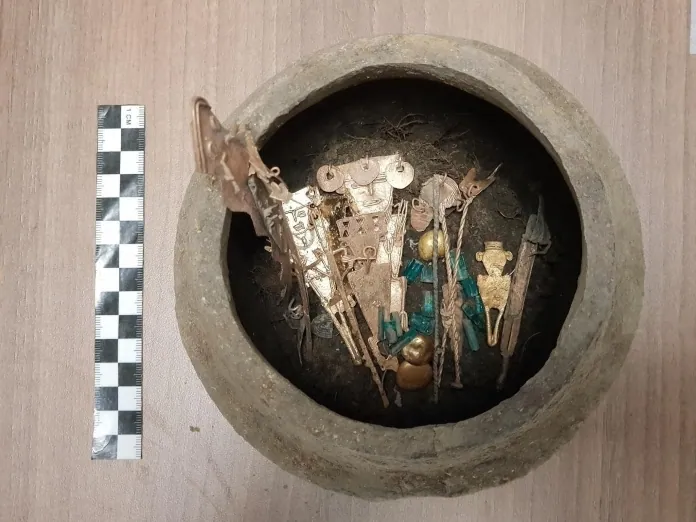
Probably not for bench work. Eva and Leo earn their place when the object stops being jewelry-sized — a trophy, a sculpture, a display piece, an artefact in situ — or when nothing can be tethered to a laptop, which is what Leo's onboard processing, screen and battery are for. The Muisca excavation ran on Eva for exactly that reason.

Bring us your hardest piece
Tell us what you make and which piece has been impossible to model. A specialist will come back with the scanner that fits it — and, where it helps, a sample scan of something like it.